A different kind of brace.
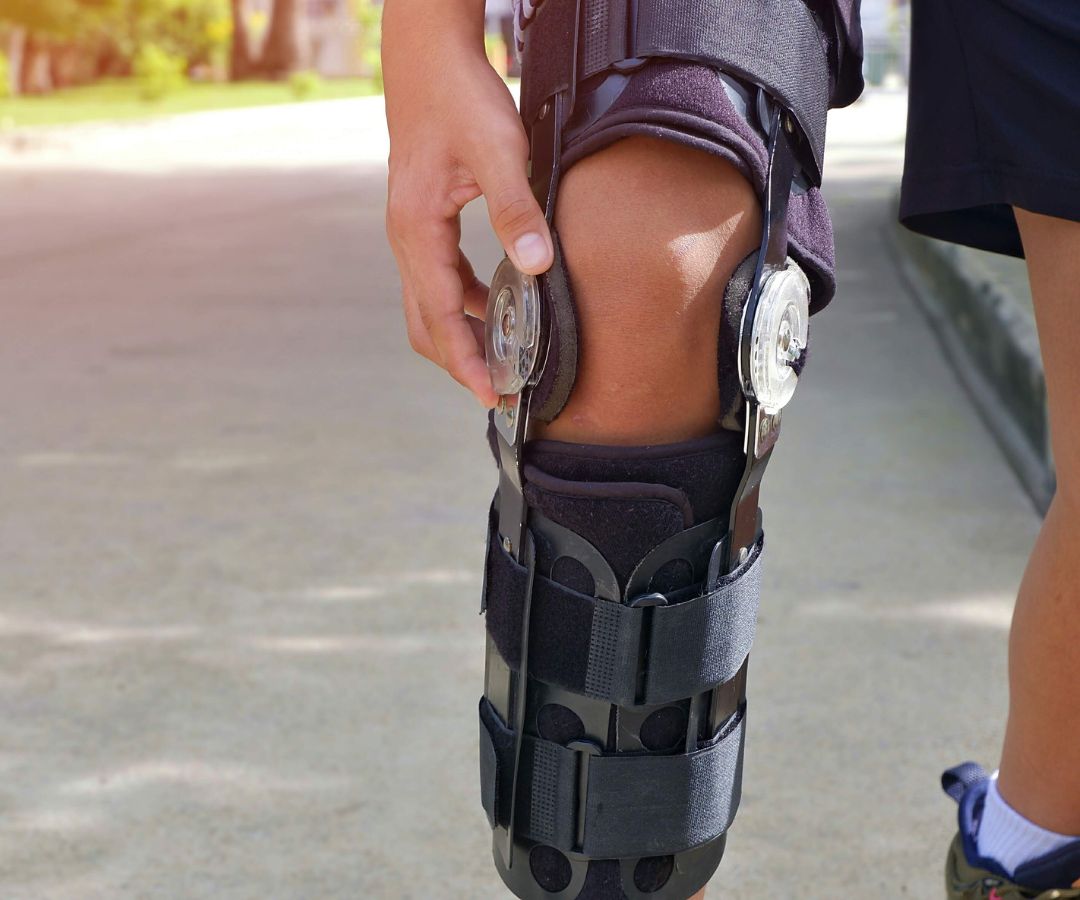
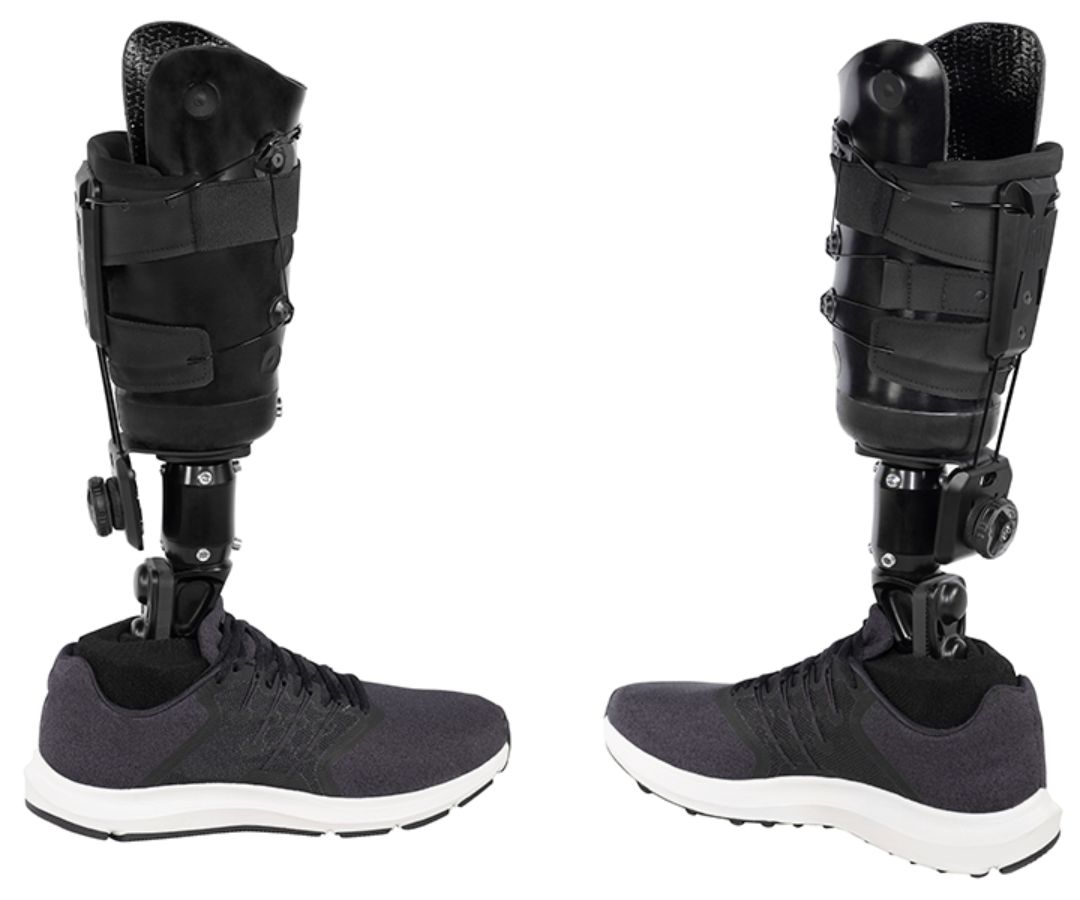
The C-Brace is not a knee replacement. It’s not a microprocessor knee, either. It’s a microprocessor-controlled knee-ankle-foot orthosis (KAFO) — an external brace worn by patients who still have their leg, but whose muscles can no longer reliably support it.
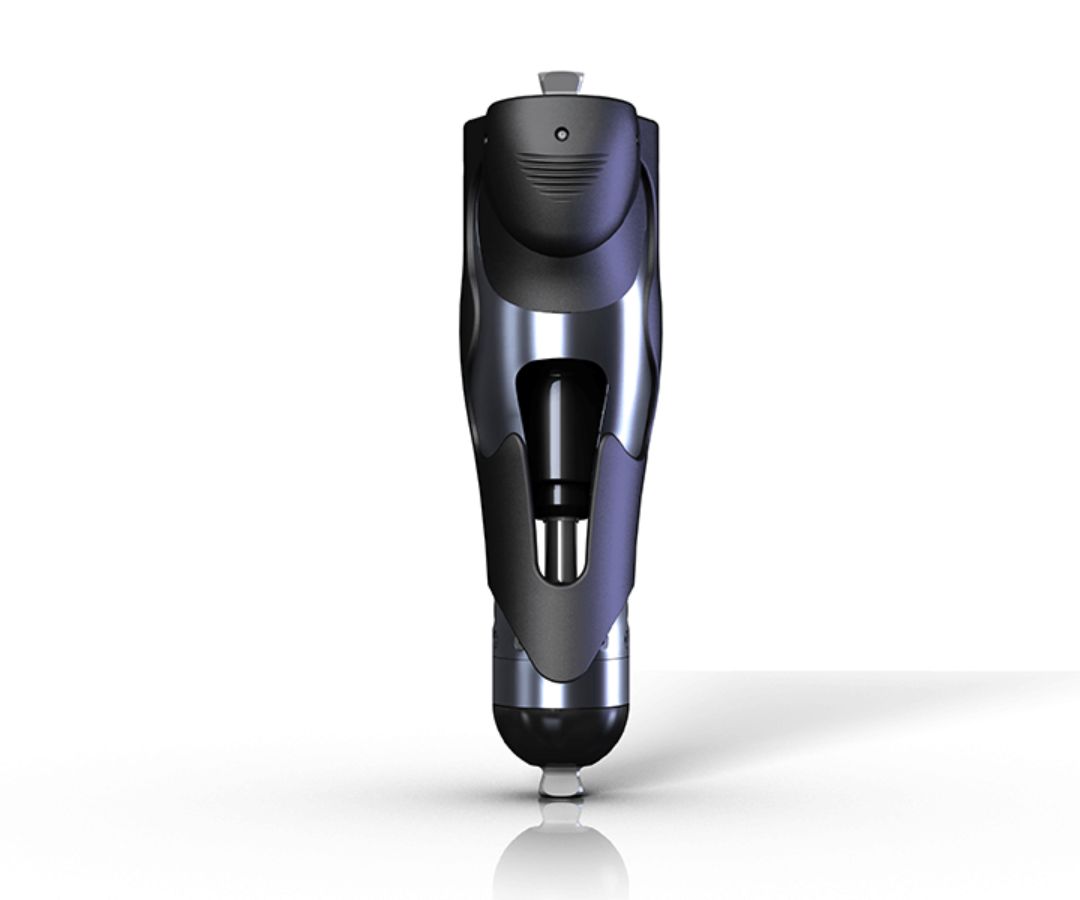
Unlike traditional locked KAFOs that force a stiff-knee gait, the C-Brace senses every step in real time and adjusts hydraulic resistance to allow controlled knee flexion during stance — restoring a far more natural walking pattern, step-over-step stair descent, and the confidence to sit, stand, and walk without locking the knee.
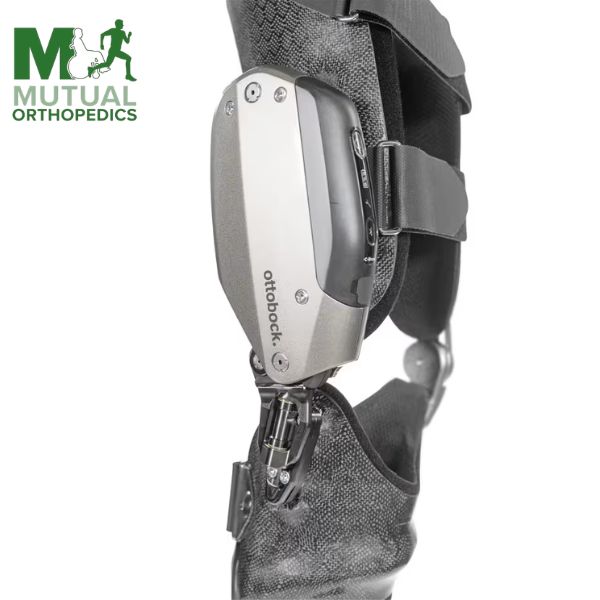
The C-Brace, fitted on Long Island
Mutual Orthopedics is an Ottobock-certified C-Brace provider serving Long Island, Suffolk County, and Brooklyn. We fit, train, and support patients with lower-limb paresis from incomplete spinal cord injury, post-polio syndrome, stroke, multiple sclerosis, and traumatic nerve injuries — using the world’s first microprocessor stance-and-swing-control orthosis.
- Real-time sensingSensors measure joint angle, velocity, and load up to 50 times per second — anticipating each phase of your step before your weight shifts.
- Hydraulic stance & swingControlled knee flexion during stance protects against falls on uneven terrain. Free swing during the swing phase allows a more natural gait pattern.
- App-supported tuningThe Cockpit app and clinician software let your prosthetist fine-tune your device for cycling, golf, stair training, and other activity-specific modes.
- Stairs, step over stepWhere a locked KAFO forces a step-to pattern, the C-Brace supports reciprocal stair descent — a meaningful change in daily independence.
- Confident sittingControlled flexion lets you lower yourself into a chair smoothly, without the abrupt collapse common with traditional locked-knee braces.
- Uneven terrainRamps, curbs, grass, gravel — the C-Brace adapts dynamically, helping you walk in environments that locked braces typically rule out.
Who the C-Brace can help – Conditions we fit for.
The C-Brace is designed for patients with lower-limb paresis — partial weakness or paralysis, where the leg is still present but no longer reliably supports body weight. A candidacy evaluation determines whether your specific condition and presentation are a fit.
Incomplete spinal cord injury
Multiple sclerosis
Traumatic brain injury
Post-polio syndrome
Traumatic nerve injury
Selected neuromuscular disorders
Post-stroke weakness
Guillain-Barré recovery
Not sure if you qualify?
The C-Brace is designed for patients with lower-limb paresis — partial weakness or paralysis, where the leg is still present but no longer reliably supports body weight. A candidacy evaluation determines whether your specific condition and presentation are a fit.
How the C-Brace Works
Sensors, hydraulics, and a steady step.
Real-time sensing
Confident sitting
Hydraulic stance & swing
Uneven terrain
Ramps, curbs, grass, gravel — the C-Brace adapts dynamically, helping you walk in environments that locked braces typically rule out.
App-supported tuning
The Cockpit app and clinician software let your prosthetist fine-tune your device for cycling, golf, stair training, and other activity-specific modes.
Stairs, step over step
Our Long Island and NYC Locations
Islandia Location
- 1767 Veterans Memorial Hwy #42, Islandia, NY 11749
- 631-265-4444
- Mon-Fri: 9am-5pm
Brooklyn Location
- 702 8th Ave, Brooklyn, NY 11215
- 631-265-4444
- Mon-Fri: 9am-5pm
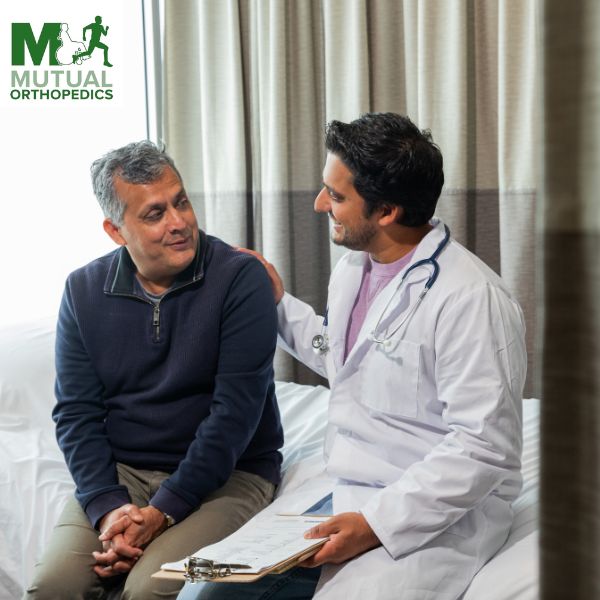
The C-Brace process at Mutual.
Fitting a C-Brace is a multi-month process involving your prosthetist, your physician, your physical therapist, and your insurer. Here is what to expect, in plain terms.
- Candidacy evaluation A clinical assessment of your lower-limb strength, range of motion, gait, and goals — and an honest conversation about whether the C-Brace is the right fit.
- Insurance authorization We gather clinical documentation, submit pre-authorization, and advocate with your insurer. Most commercial plans and Medicare cover the C-Brace with appropriate justification.
- Casting & fabrication A precise cast or 3D scan of your limb anchors the custom orthotic frame. Componentry is then assembled and prepared for your initial fitting.
- Fitting & tuning Your prosthetist programs the hydraulic resistance to your gait. Expect multiple adjustment visits as you and the device learn one another.
- Gait training We coordinate with your physical therapist throughout — stairs, ramps, uneven ground, and the activities you care about most.
Am I a candidate for a C-Brace?
Candidacy is established through a clinical evaluation with our certified team. These are the general criteria most patients meet — but the right answer for you depends on your specific presentation, goals, and medical history.
- Lower-limb paresis, not complete paralysis The C-Brace supports a leg that is weak — not one that is fully paralyzed or absent.
- Sufficient hip flexion You need enough hip strength to swing the leg forward during gait.
- Stable joint anatomy Knee and hip joints intact and stable, with no severe contractures preventing the brace from fitting properly.
- Cognitive readiness The ability to learn the device, follow safety guidance, and respond to its feedback during walking.
- Cardiovascular tolerance Enough endurance to tolerate upright weight bearing and gait training over multiple sessions.
- Healthy skin & soft tissue Skin in good condition where the brace will contact the limb, without open wounds or unmanaged edema.
FAQ: C-Brace on Long Island
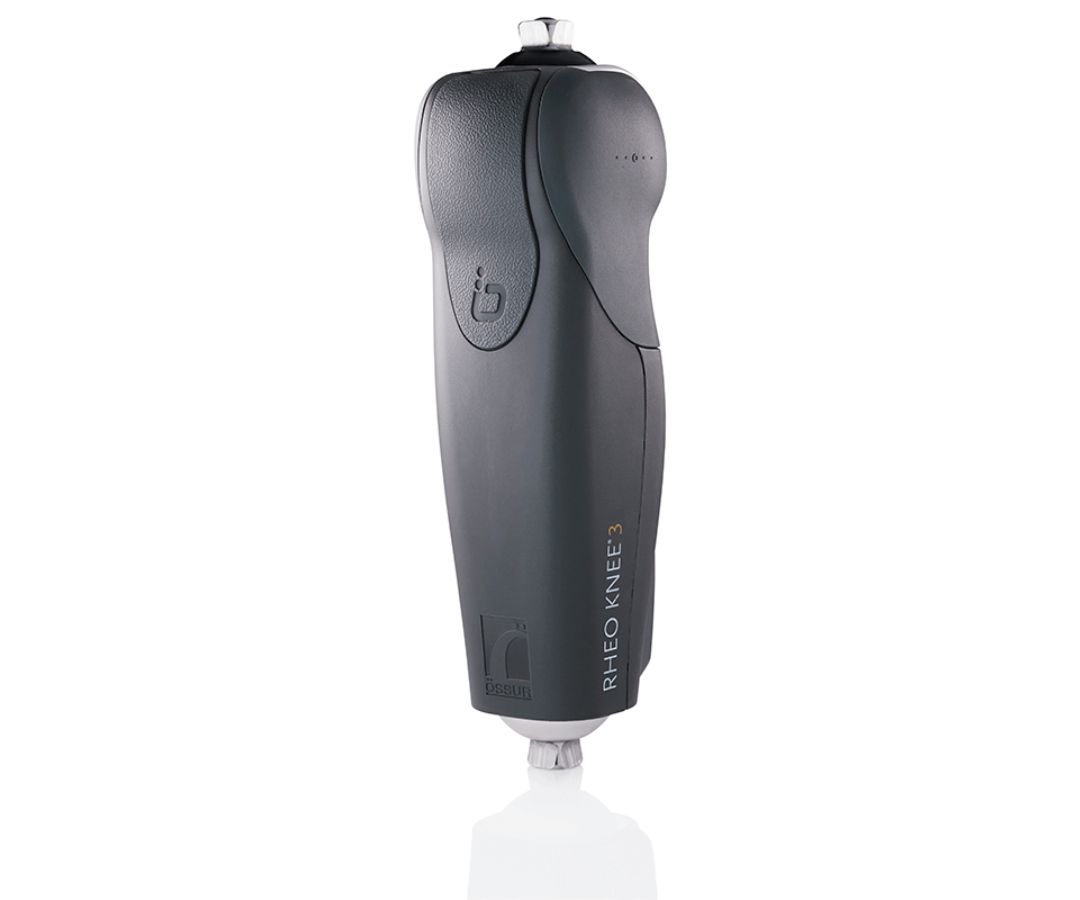
A microprocessor knee like the Ottobock C-Leg replaces a missing knee for an amputee. The C-Brace is worn over an intact leg whose muscles cannot reliably support it. Both use sophisticated sensors and hydraulics, but they solve very different problems.
A traditional KAFO locks the knee in extension during stance, forcing a stiff-legged gait and step-to stair descent. The C-Brace allows controlled knee flexion during stance — meaning a more natural gait, step-over-step stair descent, smoother sitting, and far better performance on uneven terrain.
From initial candidacy evaluation to delivery, expect roughly two to four months — with insurance authorization typically the longest single step. Once you have the device, expect several adjustment visits and a structured course of gait training with your physical therapist.
Most insurers require a prescription from your physician, physiatrist, or neurologist for orthotic care. Our team coordinates directly with your provider, gathers documentation, and verifies benefits before your first appointment.
What Our Patients Have To Say
Testimonials